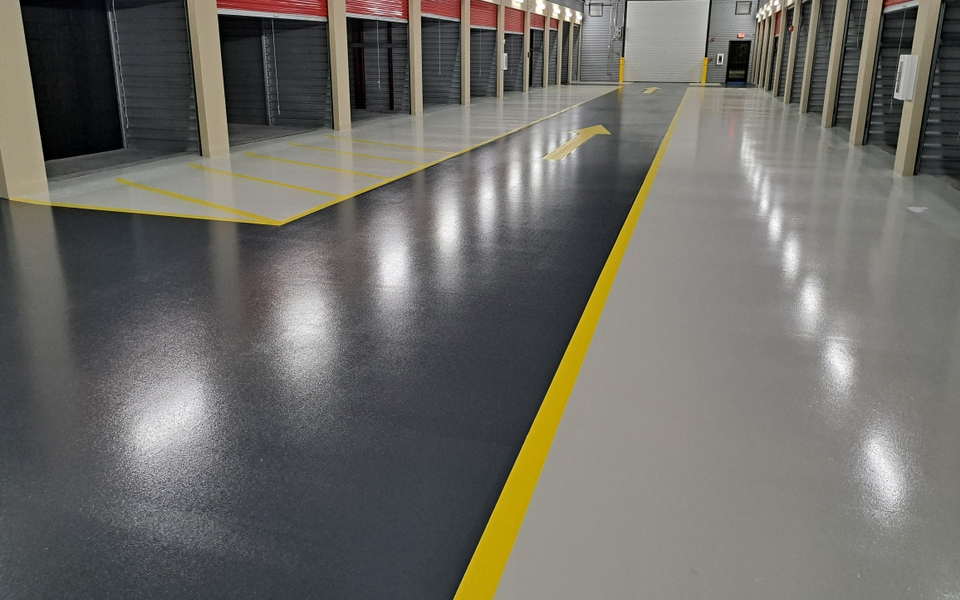
Modern buildings demand flooring systems that can handle high traffic, heavy equipment, and exposure to chemicals or moisture. Traditional concrete or tile surfaces often require frequent repairs or maintenance under such conditions. This is why epoxy-based flooring systems have become widely used across commercial, industrial, and institutional facilities.
Epoxy flooring is known for its durability, seamless structure, and resistance to environmental and mechanical stress. By forming a hardened protective layer over concrete substrates, epoxy enhances structural strength while also improving hygiene and safety standards. Understanding how epoxy flooring contributes to durability helps building planners, engineers, and facility managers choose flooring systems that support long-term structural performance.
The structural benefits of epoxy flooring systems for commercial buildings, warehouses, and manufacturing environments exposed to heavy machinery loads
Epoxy flooring significantly strengthens floor surfaces by creating a dense, bonded layer over concrete. This layer distributes weight more evenly and protects the underlying slab from cracking or deterioration.
In environments where forklifts, heavy equipment, or storage systems operate continuously, floor surfaces must resist:
- Point load pressure from heavy equipment wheels
- Impact from dropped tools or materials
- Constant vibration from machinery
Epoxy coatings reduce surface wear and prevent microfractures from forming in concrete. Over time, this helps maintain structural integrity across large floor areas.
In large commercial construction projects, facility owners often coordinate flooring installation with specialists such as a flooring subcontractor in dubai to ensure surfaces meet structural performance and safety requirements during construction and long-term operation.
How epoxy flooring creates seamless surfaces that help prevent dust accumulation, bacterial growth, and moisture penetration issues
Seamless flooring is critical in environments that require strict hygiene standards. Traditional flooring materials often contain grout lines or joints that trap dirt, moisture, and bacteria. Epoxy flooring eliminates these weak points by creating a continuous surface.
Seamless epoxy surfaces help:
- Prevent dust particles from accumulating in joints
- Reduce bacterial growth in healthcare or food production environments
- Stop moisture from penetrating into concrete layers
- Simplify cleaning and sanitation procedures
Because the surface is non-porous, spills remain on top of the coating rather than soaking into the concrete. This helps preserve both hygiene and structural stability.
Facilities that use high-performance coatings such as epoxy flooring often report lower maintenance requirements and improved indoor environmental quality compared to untreated concrete floors.
The role of epoxy flooring thickness layers in determining impact resistance and load-bearing capacity for industrial floors
Epoxy flooring systems can be customized in thickness depending on performance requirements. Thicker coatings provide greater resistance to impact, abrasion, and heavy loads.
Typical thickness levels include:
Thin Coatings (1–2 mm)
Used in light commercial or residential applications.
Medium Thickness Systems (2–4 mm)
Common in warehouses and medium-duty industrial spaces.
Heavy-Duty Systems (4 mm and above)
Used in manufacturing plants, aircraft hangars, and logistics hubs.
Thicker coatings improve:
- Impact resistance against dropped tools
- Resistance to forklift tire wear
- Load distribution across concrete slabs
Proper thickness selection ensures flooring systems meet the operational demands of the building.
Differences between decorative epoxy flooring systems and industrial-grade epoxy flooring used for extreme performance conditions
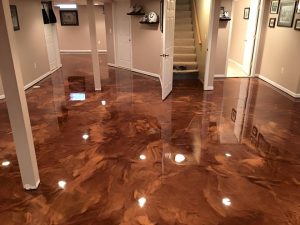
Epoxy flooring is not limited to industrial environments. Decorative systems are widely used in commercial showrooms, offices, and residential garages.
Decorative epoxy typically focuses on:
- Aesthetic finishes such as metallic or flake coatings
- Moderate traffic durability
- Easy cleaning properties
Industrial epoxy systems prioritize:
- Chemical resistance
- Heavy load tolerance
- Maximum abrasion resistance
Both systems rely on the same chemical bonding principles but differ in formulation and thickness based on intended use.
How substrate quality and moisture content influence epoxy flooring adhesion, lifespan, and resistance to peeling or cracking
Concrete substrate condition plays a critical role in epoxy performance. Poor substrate quality often leads to coating failure, regardless of epoxy quality.
Key substrate factors include:
- Moisture vapor transmission levels
- Surface contamination (oil, grease, dust)
- Concrete curing age
- Surface roughness profile
Moisture is particularly important. If moisture rises through concrete slabs, it can weaken epoxy bonding and cause peeling or blistering.
Proper preparation typically includes:
- Moisture testing
- Mechanical grinding or shot blasting
- Crack and joint repair
- Surface cleaning
These steps ensure maximum adhesion and coating lifespan.
Long-term performance comparison between epoxy flooring systems and ceramic, stone, or untreated concrete surfaces
Compared to traditional flooring materials, epoxy coatings offer several durability advantages.
Compared to Ceramic Tile
- No grout joints to maintain
- Better impact resistance
- Lower risk of tile cracking
Compared to Natural Stone
- Lower porosity
- Easier maintenance
- More uniform surface performance
Compared to Untreated Concrete
- Higher chemical resistance
- Better abrasion resistance
- Improved dust control
In some building designs, planners also compare epoxy solutions with external surface materials like outdoor tiles to determine which materials perform best in exposed or transitional environments.
Sustainability factors and environmental considerations associated with modern epoxy flooring manufacturing and installation processes
Modern epoxy systems are increasingly designed with sustainability in mind. Manufacturers now develop low-VOC formulations that reduce environmental impact and improve indoor air quality.
Environmental benefits include:
- Long lifespan reduces replacement material waste
- Seamless surfaces reduce need for harsh cleaning chemicals
- Reflective finishes improve lighting efficiency and reduce energy consumption
Additionally, epoxy can extend the lifespan of existing concrete slabs, reducing the need for demolition and reconstruction materials.
Some facilities also implement maintenance strategies that minimize water use and chemical cleaners, further supporting environmental sustainability.
Conclusion
Epoxy flooring plays a critical role in improving building durability across commercial, industrial, and institutional environments. Its seamless design, strong adhesion to concrete, and resistance to mechanical and environmental stress make it one of the most reliable flooring solutions available today. By understanding how epoxy systems function, how they are installed, and how they perform over time, building professionals can select flooring solutions that support both operational efficiency and structural longevity.
FAQs
Why is epoxy flooring popular in industrial buildings?
Epoxy flooring is popular because it provides high durability, chemical resistance, and load-bearing strength required in industrial environments.
Does epoxy flooring help reduce maintenance requirements?
Yes, epoxy flooring reduces maintenance because it creates seamless surfaces that are easy to clean and resistant to stains and damage.
Can epoxy flooring be customized for decorative purposes?
Yes, decorative epoxy options include colored coatings, flakes, and metallic finishes for visual design flexibility.
Is epoxy flooring suitable for humid or outdoor-adjacent environments?
Yes, when properly installed and sealed, epoxy flooring can perform well in humid environments.
How does epoxy flooring handle heavy equipment and vehicle traffic?
Epoxy flooring distributes weight evenly and resists abrasion, making it ideal for heavy equipment and vehicle use.