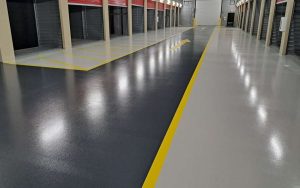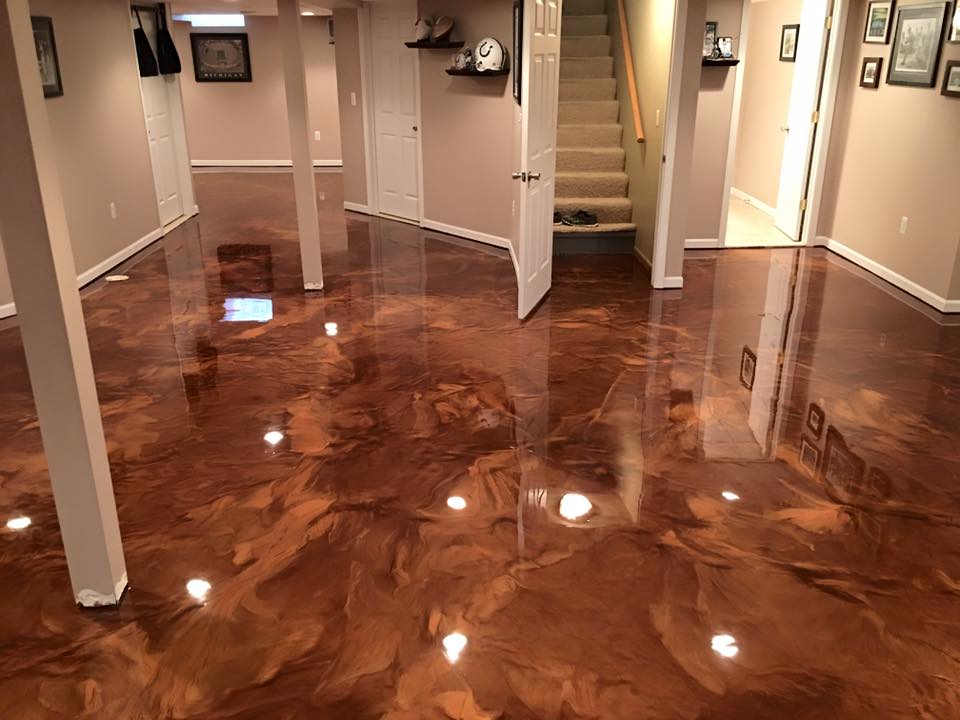
Epoxy flooring is widely recognized for its strength, durability, and seamless appearance. It is commonly applied in environments where floors must withstand heavy loads, chemical exposure, and constant foot or vehicle traffic. Unlike traditional floor coatings, epoxy forms a rigid plastic-like surface when cured, creating a highly protective and long-lasting finish over concrete substrates.

Over the years, epoxy flooring systems have evolved beyond industrial use and are now found in commercial buildings, healthcare facilities, educational institutions, and even residential garages. Its ability to combine function and appearance makes it suitable for spaces requiring both performance and visual consistency. Understanding how epoxy floors work, where they perform best, and how they should be maintained helps property owners and facility managers make informed decisions.
How epoxy floor coating systems are chemically formed and why they bond strongly to concrete surfaces in residential and industrial settings
Epoxy floor systems are created by mixing resin and hardener components. When these two materials combine, they trigger a chemical reaction called polymerization. This reaction transforms liquid epoxy into a rigid, durable surface that bonds tightly to prepared concrete.
The strong adhesion happens because epoxy penetrates microscopic pores in concrete surfaces. Once cured, it locks into place, creating resistance against peeling or delamination. This is why many industrial facilities rely on epoxy for long-term floor performance.
In many construction projects, professional installers evaluate surface conditions before applying coatings. For example, companies that specialize in large-scale floor installation often collaborate with a flooring subcontractor in dubai to ensure proper preparation and application standards are followed for maximum durability.
Key chemical benefits include:
- High compressive strength after curing
- Strong resistance to moisture penetration
- Ability to bond with properly prepared concrete substrates
- Minimal shrinkage during curing
The difference between epoxy floor finishes and traditional concrete sealers in terms of protection level, lifespan, and surface performance
Concrete sealers mainly protect surfaces from moisture and minor staining, but they do not significantly enhance structural durability. Epoxy coatings, on the other hand, form a thick, protective layer that dramatically improves floor performance.
Major differences include:
Protection Level
- Sealers provide surface-level moisture resistance
- Epoxy creates a thick barrier against chemicals, impact, and abrasion
Lifespan
- Sealers may need reapplication every 1–3 years
- Epoxy coatings can last 10–20 years with proper maintenance
Surface Performance
- Sealers maintain the look of raw concrete
- Epoxy creates smooth, seamless, and often glossy finishes
Many facilities prefer epoxy because it combines protection with improved cleanliness and hygiene performance.
Surface preparation methods required before applying epoxy floor coatings to ensure maximum adhesion and long-term durability
Proper surface preparation is one of the most critical steps in epoxy floor installation. Even high-quality epoxy products will fail if applied to contaminated or poorly prepared surfaces.
Typical preparation steps include:
- Mechanical Grinding or Shot Blasting
Removes old coatings, laitance, and contaminants. - Crack and Joint Repair
Prevents structural weaknesses from affecting coating integrity. - Moisture Testing
Ensures the concrete slab does not contain excessive moisture. - Surface Cleaning and Dust Removal
Ensures proper chemical bonding between epoxy and concrete.
When preparation is done correctly, epoxy coatings can achieve maximum lifespan and performance.
Environmental factors such as humidity and temperature that can affect epoxy floor curing time and final surface strength
Environmental conditions significantly impact epoxy curing and final performance. Temperature and humidity levels influence chemical reaction speed and bonding quality.
Important environmental considerations:
- Low Temperatures
Slow down curing and may weaken bonding strength. - High Temperatures
Speed up curing but may cause uneven finishes if not controlled. - High Humidity
Can lead to surface defects like blushing or improper curing.
In outdoor or semi-outdoor applications, flooring systems must be designed to handle environmental exposure. Some construction planners compare epoxy with solutions like outdoor flooring dubai to determine which materials perform best under sunlight, moisture, and temperature fluctuations.
Safety, hygiene, and slip resistance advantages of epoxy floor surfaces in high-traffic commercial and industrial environments
Epoxy flooring supports safety and hygiene requirements in many industries. Because it forms seamless surfaces, it prevents dirt, bacteria, and moisture from penetrating into floor cracks.
Safety advantages include:
- Slip-resistant additives can be added to epoxy coatings
- Reflective surfaces improve lighting efficiency
- Seamless finishes reduce tripping hazards
Hygiene advantages:
- Easy to clean and sanitize
- Resistant to chemical cleaning agents
- Prevents microbial growth in medical and food environments
These characteristics make epoxy common in hospitals, laboratories, warehouses, and manufacturing plants.
Maintenance routines and cleaning practices that help preserve epoxy floor shine, texture, and resistance properties over time
Although epoxy floors are durable, regular maintenance extends their lifespan and preserves appearance.
Recommended maintenance practices:
- Daily dust removal using microfiber mops
- Weekly washing using non-abrasive cleaners
- Immediate cleaning of chemical spills
- Periodic inspection for scratches or wear
Avoid:
- Acidic cleaning chemicals
- Steel brushes or abrasive pads
- Heavy impacts from sharp metal objects
When properly maintained, epoxy coatings can retain gloss and performance for many years.
In many industrial environments, facility managers choose specialized coatings such as epoxy floor systems specifically because of their low maintenance requirements compared to untreated concrete.
Common application mistakes during epoxy floor installation and how professionals avoid bonding failures and uneven finishes
Installation mistakes can significantly reduce epoxy floor lifespan. Professional installers use specific processes to avoid these issues.
Common mistakes include:
- Applying epoxy over contaminated surfaces
- Ignoring moisture levels in concrete slabs
- Incorrect mixing ratios between resin and hardener
- Applying coatings in unsuitable temperature conditions
Professional prevention methods:
- Conducting full site inspections
- Using moisture testing equipment
- Following manufacturer mixing ratios precisely
- Monitoring environmental conditions during application
Correct installation ensures consistent surface thickness and long-term performance.
Conclusion
Epoxy flooring systems provide a combination of durability, hygiene, and visual consistency that few other flooring materials can match. From industrial facilities to commercial buildings, epoxy coatings help protect concrete while improving functionality and safety. Understanding how epoxy is formed, applied, and maintained helps property owners and facility planners choose flooring solutions that meet long-term performance requirements.
FAQs
What materials are used to create epoxy floor coatings?
Epoxy coatings are made using resin and hardener components that chemically react to form a rigid plastic-like surface bonded to concrete.
How long does an epoxy floor typically last in heavy-use environments?
With proper installation and maintenance, epoxy floors can last between 10 and 20 years, depending on traffic levels and environmental conditions.
Can epoxy floor coatings be applied over old concrete surfaces?
Yes, but only if the concrete is properly cleaned, repaired, and mechanically prepared to ensure strong adhesion.
Are epoxy floor surfaces resistant to chemicals and stains?
Yes, epoxy coatings are highly resistant to many chemicals, oils, and industrial contaminants.
How long does epoxy floor curing usually take before use?
Light foot traffic is usually allowed after 24–48 hours, while full curing for heavy use may take several days depending on environmental conditions.